Fraunhofer IKS Playground

Discover the Fraunhofer IKS Playground: Innovation Meets Experimentation

With the Fraunhofer IKS Playground, the institute offers access to experimental prototypes and innovative concepts from cutting-edge research. The Fraunhofer IKS Playground invites you to learn about new approaches, experiment with our prototypes and tools, and test ideas freely. 

Test our prototypes & tools


Try out experimental technologies that can be applied in various industries.

Discover new concepts


Learn about exciting approaches from our research and development.

Collaborate with us


Engage in conversation with the scientists at Fraunhofer IKS and contribute to technological progress with your suggestions.


Discover the Fraunhofer IKS Playground


Playground

Available concepts, prototypes and tools

Be inspired by the Fraunhofer IKS Playground. Whether you want to try out the prototypes and tools or learn more about our concepts, the Fraunhofer IKS Playground gives you a detailed and concrete insight into our research topics.


Robuscope

Robustness test of AI models

Analyze the reliability of your AI models effortlessly at the push of a button. Gain valuable insights into the robustness and performance of your systems.


FAST-Framework

Application of machine learning with limited data

Improve your visual decision-making processes through feedback-guided automation of subtasks, even when only limited data is available. 


Fuzzy Cause Tree (FCT) Method

Fuzzy logic for enhancing safety and reducing risks

Optimize risk assessment and safety with our approach to analyzing cause-and-effect relationships in complex systems.


Safety Assistant

Safety engineering support through generative AI and LLMs

Use generative AI to optimize safety engineering tasks, ensure regulatory compliance, and improve decision-making in software development for safety-critical systems.


AS-PHALT

LLM-driven hazard analysis tool

Use the power of AI-driven large language models (LLMs) to create hazard analysis and risk assessment (HARA) for resource efficiency and improved reliability of safety assessments.


CADx

Enhacing confidence in AI-assisted healthcare

Empower clinicians with transparent, interpretable AI-driven diagnoses through multi-modal explanations, combining visual and concept-based insights to build trust, reduce workload, and strengthen collaboration in medical decision-making.


Safety Net

AI-Based Person Detection for Enhanced Safety and Efficiency

Optimize the protection of employees and the safe operation of autonomous systems through reliable, camera-based person detection in industrial environments.


Safe AI Sensors

Safety Assurance for AI – more safety, less risk

Optimize the development and assurance of AI-based vehicle dynamics functions with a structured, evidence-based approach to analyzing and justifying system safety.


QCNN

Quantum-enhanced AI – new perspectives for medical diagnostics

Optimize the development of AI-based diagnostic systems with an innovative hybrid approach that extends classical methods and paves the way for future clinical applications.


Quantum Zoo

Quantum Zoo – understanding and experiencing quantum computing

Discover the fundamentals of quantum computing through an interactive approach that makes complex relationships understandable and paves the way for further research and collaboration.

Get started with the Fraunhofer IKS Playground now!

Visit the Fraunhofer IKS Playground and immerse yourself in the research approaches and solutions of Fraunhofer IKS!

If you have any questions or require further information, please do not hesitate to contact us. We also greatly appreciate your feedback.

And, of course, we will support you in applying our approaches in your company. 

Contact us directly:
 

Go to the contact form

The Fraunhofer IKS Playground is growing

Here you will find the latest research concepts, prototypes and tools. And development continues. We are currently working on further concepts, which you will soon be able to experience on the Fraunhofer IKS Playground.

Here we present the concepts, prototypes and tools currently available:

  • Increase functional safety with the Fuzzy Cause Tree (FCT)

    The Fuzzy Cause Tree (FCT) allows you to analyze cause-and-effect relationships between triggering conditions and system failures with greater precision, especially in the face of uncertainties. The Fuzzy Cause Tree (FCT) is an innovative approach developed by Fraunhofer IKS that significantly reduces risks and improves the safety of the intended functionality (SOTIF).

    What is the Fuzzy Cause Tree method?

    The Fuzzy Cause Tree method uses the principles of fuzzy logic to manage the complexity of real-world systems. Unlike traditional logic, which is limited to absolute true or false values, fuzzy logic allows for a differentiated assessment of truth values on a spectrum. This makes it possible to capture uncertainties and vague conditions more effectively and make smarter decisions.


    © Fraunhofer IKS

    Your benefits with the Fuzzy Cause Tree:

    • Leverage the power of fuzzy logic: Our approach captures uncertainties and vague conditions far better than conventional methods.
    • Enhance your analysis with FCTs: Combine the FCT method with statistical methods such as Monte Carlo simulations to gain deeper insights into the effects of causes on system behavior. This enables you to make informed decisions that significantly improve safety.

    Why the Fuzzy Cause Tree?

    The Fuzzy Cause Tree offers a flexible and intuitive approach to modeling complex causal relationships that goes beyond the limitations of conventional methods. It enables a better understanding of risks and promotes informed decisions in safety-critical systems, especially in the automotive industry.


    Try the fuzzy cause tree method now!

  • Analyze the reliability of your AI models at the push of a button with Robuscope

    Robuscope, an application developed by Fraunhofer IKS, allows you to easily evaluate the reliability of your AI models. With just one click, you can gain valuable insights into the robustness and performance of your AI systems.

    What is Robuscope?

    Robuscope is a self-service platform that answers the question: "Can I trust my AI?" Robuscope provides you with detailed information on potential improvements to ensure that your AI models are reliable, efficient, and ready for use in safety-critical applications.

    © Fraunhofer IKS

    Your benefits with Robuscope:

    • No sensitive data required: You don't need to disclose any confidential or sensitive information to test your systems for reliability.
    • Actionable insights: Get clear interpretations and actionable results that help you optimize your AI model.
    • Comprehensive assessment: Detailed reports on the robustness of your AI models reveal potential weaknesses and areas for improvement, ensuring that your AI systems reach their full potential.

    Why Robuscope?

    With Robuscope, the days of AI black boxes are over. Robuscope enables you to address potential issues early on and increase the trustworthiness of your AI applications. This allows you to minimize risks and maximize performance.


    Test your AI models now!

  • Optimize your safety engineering with the Fraunhofer IKS Safety Assistant

    The Fraunhofer IKS Safety Assistant is an innovative front-end solution that optimizes safety engineering tasks through the use of generative AI (GenAI). Given the increasing complexity of software development for safety-critical systems, AI-powered assistants can provide support in overcoming these challenges.

    What is the Fraunhofer IKS Safety Assistant?

    The Safety Assistant leverages the capabilities of large language models to bridge the gap between technological progress and safety assurance. To do this, it automates essential aspects of the safety engineering workflow, thereby changing the approach to safety engineering.

    © Fraunhofer IKS

    Your benefits with the Fraunhofer IKS Safety Assistant:

    • Better understanding of the safety engineering workflow: Our mission is to deepen the understanding of complex relationships within safety-critical systems. The Safety Assistant examines how generative AI can streamline the planning of measure validation and ensure the accurate implementation of requirements.
    • Generate robust safety verifications: With the help of the Safety Assistant, safety engineers can generate robust safety verifications and bring innovations into application quickly and safely.

    Why choose the Fraunhofer IKS Safety Assistant?

    The Fraunhofer IKS Safety Assistant enables you to master the complexity of software development for safety-critical systems. This allows you to bridge the gap between innovation and safety.


    Learn about the Fraunhofer IKS Safety Assistant vision now!

  • Transform your decision-making with the FAST Framework

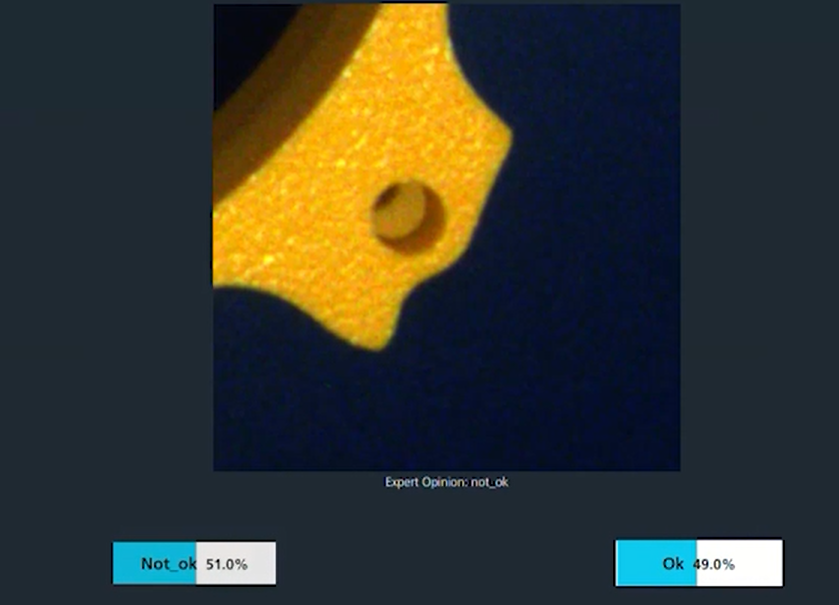
    With the Fraunhofer IKS FAST Framework, you can effectively and efficiently handle decision-making tasks driven by visual information such as quality inspections or medical diagnoses – even when only limited data is available. 

    What is the FAST Framework?

    FAST stands for "Feedback-guided Automation of Sub-tasks." The framework improves decision-making through the use of advanced automation techniques. To do this, FAST identifies sub-tasks that can be automated, while the remaining more complex tasks are delegated to experts.

    © Fraunhofer IKS

    Your benefits with the FAST framework:

    •  Immediate impact: Rapid implementation of partial solutions without lengthy data collection phases.
    • Lower barriers and risks: Minimal initial data requirements make setup easier.
    • Enhanced efficiency: Experts can focus on complex problems.
    • Build trust: Collaboration with the system promotes acceptance and trust in AI solutions.

    Why FAST?

    The FAST framework enables increased operational efficiency, reduced errors, and improved overall productivity by combining the strengths of automation with human expertise. This hybrid approach not only speeds up decision-making but also ensures high-quality results.


    Learn more about FAST now!

  • Transform your safety engineering processes with the HARA Assistant

    With Fraunhofer IKS's AS-PHALT proof of concept, you can use the power of AI-driven large language models (LLMs) to perform hazard analysis and risk assessment (HARA). This enables you to use resources more efficiently and improve the reliability of safety assessments.

    What is AS-PHALT?

    AS-PHALT stands for “Automation Systems – Pro Human Assistant LLM Tool.” Using the example of hazard analysis and risk assessment, we illustrate how AI can help identify and evaluate hazards through an interactive, user-friendly interface. The concept aims to optimize the hazard analysis process through innovative automation techniques.

    © Fraunhofer IKS

    Your benefits with AS-PHALT:

    • Immediate effect: Experience the rapid deployment of a partial solution that bypasses lengthy data collection phases.
    • Fewer obstacles and risks: Benefit from minimal initial data requirements that facilitate integration into existing processes.
    • Improved efficiency: Relieve safety experts by automating routine tasks so they can focus on complex problem solving.
    • User-friendly interface: Work efficiently with the system thanks to a structured workflow and familiar visualization of results.

    Why AS-PHALT?

    The AS-PHALT concept makes it possible to increase efficiency in safety technology and reduce the complexity of safety assessments in automated applications. The use of generative AI makes safety assessment more agile and innovative.


    LEARN MORE ABOUT AS-Phalt!

  • Discover the Enhanced CADx Framework: Redefining Trust in AI-Driven Medical Diagnosis

    Introducing the Enhanced CADx Framework, an advanced computer-aided diagnosis (CADx) system developed to empower clinicians with AI support that is transparent, interpretable, and easy to validate. Moving beyond black-box diagnostics, this framework provides multi-layered explanations – both visual and concept-based – through a single intuitive interface.

    What is CADx?

    The Enhanced CADx Framework bridges the gap between clinical expertise and artificial intelligence by making AI reasoning clear, explainable, and clinically meaningful. Rather than providing opaque outputs, the system enables clinicians to explore how and why the AI arrived at its diagnosis –supporting trust, efficiency, and collaboration in healthcare workflows.

    Your benefits with CADx:

    • Multi-modal explainability: Combines visual explanations (e.g., Grad-CAM heatmaps) with concept-based reasoning (e.g., TCAV) for a holistic understanding of AI decisions.
    • Intuitive interface: Integrates multiple explanation types in one user-friendly platform, allowing clinicians to easily interact with and validate AI results.
    • Clinically grounded insights: Translates AI reasoning into clinical concepts, ensuring that explanations are relevant and actionable.
    • Aligned diagnostics: Guarantees that diagnostic outputs correspond directly to the explanations provided, enhancing consistency and transparency.

    Why CADx?

    Traditional CADx systems often operate as “black boxes”, offering limited insight into their diagnostic rationale. The Enhanced CADx Framework eliminates this opacity, reducing the need for manual validation and strengthening clinician confidence in AI-assisted healthcare. By revealing the logic behind AI diagnoses, the system transforms AI from a mere analytical tool into a trusted, collaborative partner in patient care.


     Learn more about cAdx

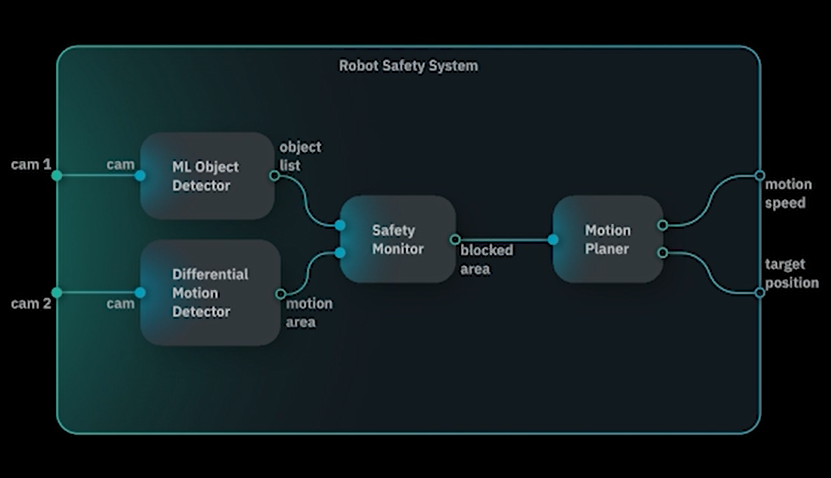
  • Safety Net - AI-Based Person Detection for Enhanced Safety and Efficiency

    Analyze and enhance safety in industrial workspaces efficiently and pragmatically. Gain reliable insights into the interaction between humans and machines and establish a solid foundation for safe, productive processes.

    With Safety Net, we support organizations in deploying AI-based person detection in safety-critical industrial applications and systematically reducing operational risks.

    What is the Safety Net approach?

    The Safety Net approach leverages modern artificial intelligence methods to reliably detect people in industrial environments and assess safety-relevant situations at an early stage. Instead of relying solely on rigid protective measures, Safety Net enables a context-aware and situation-dependent evaluation of risks.

    By taking real-world operating conditions into account, uncertainties can be captured more effectively, and safety functions can be applied precisely where they are needed.

    Your benefits with Safety Net:

    • Reliable AI-based person detection: The approach enables precise detection of people in the vicinity of autonomous systems and significantly contributes to improved workplace safety.
    • Systematic safety assessment: Safety Net supports a structured analysis of potential hazards and provides transparency regarding safety-relevant system states.
    • Practical integration: The approach can be deployed alongside existing safety measures and supports efficient operations without unnecessary restrictions.

    Why Safety Net?

    Safety Net offers a flexible and transparent approach to safeguarding human–machine interactions in industrial environments. By combining AI-driven perception with structured safety reasoning, risks can be better understood and well-informed decisions can be made.

    Especially in dynamic and automated industrial settings, Safety Net helps organizations balance safety and productivity while enabling the responsible use of artificial intelligence.


    Learn More about Safety Net

  • Increase the safety of AI-based vehicle dynamics functions with Safety Assurance

    With our Safety Assurance approach, you can analyze and substantiate the safety of AI-based vehicle dynamics functions throughout the entire development process – even under uncertain conditions and in open operating environments. The approach was developed at Fraunhofer IKS and supports you in reducing risks and providing a sound safety argument for the use of intelligent systems.

    What is the Safety Assurance approach for AI systems?

    The Safety Assurance approach extends established development processes in a targeted manner to make them suitable for the use of artificial intelligence. Instead of addressing safety only at selected points, it is considered systematically across all phases – from analysis and design to verification and validation.
    This makes it possible to structure and justify even complex interactions between AI, the system, and its environment in a transparent and comprehensible way.

    Your benefits Safety Assurance for AI:

    • Leverage a structured development approach: Integrating safety aspects into all development phases creates transparency and enables well-founded safety arguments.
    • Strengthen your evidence through systematic assurance: Clear argumentation structures and evidence-based justification provide a robust foundation for approval, assessment, and further development of AI-based functions.

    Why Safety Assurance for AI-based vehicle dynamics?

    The Safety Assurance approach provides a clear and comprehensible framework for assuring complex AI systems. It helps developers identify risks at an early stage, implement targeted safety measures, and convincingly argue system safety even in open environments. Especially in safety-critical domains such as vehicle dynamics, this approach builds trust and supports confident decision-making.


    Learn More about Safe AI Sensors

  • Enhance medical imaging diagnostics with quantum-enhanced AI

    Quantum-enhanced artificial intelligence opens up new possibilities for more precise and efficient diagnostics in medical imaging. Our approach combines classical AI methods with quantum technologies to systematically address existing limitations—particularly in scenarios with limited training data. This work is developed at the Fraunhofer Institute for Cognitive Systems IKS with the goal of enabling powerful and trustworthy AI solutions for medical applications.

    What is quantum-enhanced AI for medical diagnostics?

    Quantum-enhanced AI leverages hybrid quantum–classical algorithms that combine the strengths of both computing paradigms. By integrating quantum-specific computational operations into classical AI models, complex patterns in medical imaging data can be captured more effectively.

    This approach opens up new perspectives for the use of AI in medical diagnostics—even under challenging conditions such as limited data availability.


    Your benefits with quantum-enhanced AI:

    • Leverage innovative hybrid algorithms:
      The combination of quantum and classical processing enables improved analysis of complex medical imaging data.
    • Increase efficiency when working with limited data:
      Quantum-enhanced approaches provide new ways to develop robust and high-performing AI models even with small datasets.

    Why quantum-enhanced AI in medicine?

    The use of AI in medical imaging comes with high requirements for accuracy, reliability, and data quality, while large, well-annotated datasets are often difficult to obtain. Quantum-enhanced AI offers a forward-looking approach to systematically address these challenges and unlock new performance potential for medical diagnostic systems.


    Learn More about Quantum-enhanced AI for Medical Diagnostics

  • Explore the world of quantum computing with the Quantum Zoo

    The Quantum Zoo offers an intuitive and interactive entry point into the world of quantum computing. The approach makes it possible to understand fundamental concepts and mechanisms of quantum-based computation and to explore their potential for real-world applications. The Quantum Zoo is developed at Fraunhofer IKS with the goal of making complex quantum technologies tangible and accessible. 

    What is the Quantum Zoo?

    The Quantum Zoo is a playful, interactive environment for demonstrating gate-based quantum computing. It illustrates how quantum operations act on quantum states that can represent more than one classical state at the same time.
    By using suitable algorithms, it demonstrates how quantum parallelism can be leveraged to perform computations that can theoretically outperform classical computing methods exponentially.

    Your benefits with the Quantum Zoo:

    • Experience the principles of quantum computing first-hand:
      Core concepts such as superposition, interference, and entanglement are conveyed visually and interactively, making them intuitive and easy to understand.
    • Deepen your understanding of quantum circuits:
      Users can build simple quantum circuits themselves, combine quantum gates, and directly observe how these operations affect the states of the qubits.

    Why the Quantum Zoo?

    Quantum computing holds enormous promise, but it also presents significant challenges—particularly when mapping real-world problems onto efficient quantum algorithms. The Quantum Zoo provides a low-threshold yet technically sound introduction to this field. It helps users gain a better understanding of how quantum-based systems work and to realistically assess the limitations of current quantum hardware.

    Learn More about Quantum-ZOO

Arrange a consultation now

Do you have any further questions or are you interested in a free, no-obligation consultation? Then fill out the contact form below. We will get in touch with you as soon as possible.

Thank you for your interest in the Fraunhofer IKS.

We have just sent you a confirmation e-mail. If you do not receive an e-mail in the next few minutes, please check your spam folder or send us an e-mail to business.development@iks.fraunhofer.de.

* Required

An error has occurred. Please try again or contact us by e-mail: business.development@iks.fraunhofer.de

Thematic focus (optional)